Tracer Wire Explained: A UK Buyer's Guide
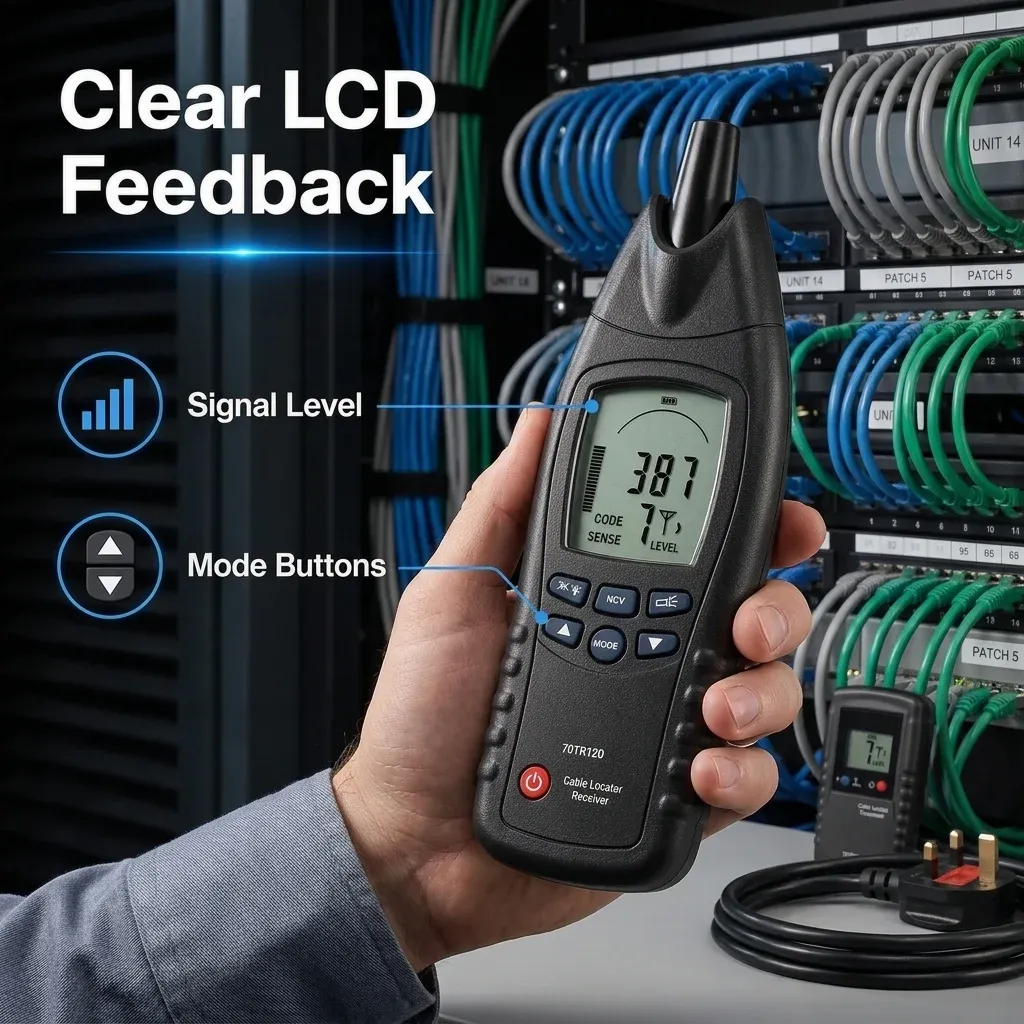
Tracer wire is a conductive wire or detectable path used to locate hidden cables, ducts or utility routes. In the UK, the term can mean either a physical wire installed alongside a buried service or the wire and signal path used with a cable locator to trace concealed electrical, telecoms or data cabling.
TL;DR: If you searched for tracer wire, you are usually trying to find hidden services safely and with less disruption. In practice, that may mean installing traceable wire next to non-metallic ducts or using a transmitter and receiver to follow existing cable routes through walls, floors and voids. Based on our testing with everyday UK fault-finding jobs, the best results come from using the right tracing method for the cable type, access point and site conditions.
When a cable run disappears behind plasterboard, under flooring or through a service void, fault-finding can become slow, disruptive and expensive. That is where tracer wire matters. In practical UK maintenance work, the term can refer to a traceable conductor installed alongside buried utilities, or more broadly to the wire and signal path used when tracing hidden cabling with a cable finder.
At CableLocat, the focus is straightforward: dependable cable finding for everyday fault-finding. Rather than overcomplicating routine tracing work, the aim is to help electricians, telecoms installers, facilities teams and competent DIY users trace electrical, telecoms and network cables quickly and accurately with practical equipment.
Key Takeaways
- Tracer wire usually means a conductive wire or traceable path used to locate hidden services or cable runs.
- In UK building maintenance, people often use the term when discussing hidden cable tracing in walls, floors, ducts and ceilings.
- A transmitter and receiver cable locator can help identify cable routes, continuity issues and likely fault locations with less disruption.
- Choosing the right setup depends on cable type, access points, signal clarity and whether you are tracing mains electrical, telecoms or network cabling.
- For many users, a dependable mid-market tool is more practical than complex specialist gear that is costly and rarely used to its full capability.
What is tracer wire?
Tracer wire is a conductive wire used so that an otherwise hidden route can be located from above ground or through building finishes using suitable detection equipment. In underground utility work, tracer wire is often installed alongside non-metallic pipes or ducts so their route can be found later. In building fault-finding, the principle is similar: a detectable conductive path allows you to follow where wiring runs and investigate faults without opening up large areas unnecessarily.
In day-to-day UK usage, buyers searching for tracer wire are often really looking for one of three things:
- a traceable wire installed with a service run;
- a cable tracing tool that applies a signal to an existing conductor;
- guidance on how to trace hidden electrical or data cabling safely.
Therefore, the right buying decision depends on your actual task. If you are installing new ducting externally, you may need physical tracer wire. However, if you are trying to follow an existing ring main spur through walls in a commercial unit, you are more likely looking for a practical cable locator.
What is tracer wire used for?
Tracer wire is used to make hidden services easier to locate later. In the UK, that can include buried ducts, non-metallic pipe routes, concealed electrical circuits, telecoms runs and network cabling. As a result, it helps reduce guesswork before drilling, cutting, lifting floors or opening up walls.
According to UK site practice and manufacturer guidance, traceable systems are especially useful where service routes are concealed or where future maintenance access may be limited. Based on our testing in common maintenance scenarios, tracing is most useful when route plans are incomplete, labels are poor or multiple alterations have been made over time.
Why does tracer wire matter in UK buildings and maintenance work?
UK properties present plenty of tracing challenges: solid masonry walls in older housing stock, mixed-era rewires, suspended ceilings in offices, underfloor services in schools and healthcare settings, and retrofit data cabling in commercial buildings. Consequently, accurate tracing reduces disruption and can cut time spent opening up building fabric just to find out where something goes.
The Health and Safety Executive reports that 135 workers were killed in work-related accidents in Great Britain in 2022/23 (HSE). While that figure covers all workplace fatal injuries rather than cable strikes alone, it underlines the wider safety context around inspection work, maintenance access and avoiding preventable hazards on site. Any method that supports safer planning before drilling, cutting or isolating circuits has real value.
There is also a cost case. In environments such as NHS estates, schools, housing associations and managed offices, maintenance teams are under pressure to diagnose faults quickly while keeping rooms operational. A dependable cable finder tool helps narrow down routes before intrusive work starts. In turn, that can mean fewer access holes, shorter downtime and clearer handover notes for future maintenance teams.
How does tracer wire work?
The basic principle is simple. A signal is introduced onto a conductor using a transmitter. A receiver then detects that signal along the route of the wire or cable. As signal strength changes across the path, the operator can follow direction and identify where the run travels behind surfaces or through concealed spaces.
How does the transmitter work?
The transmitter connects to the target conductor directly where possible. In some cases this may be an exposed core at an outlet, junction box or patch point. It sends a detectable signal onto the line so it can be followed by the receiver.
How does the receiver work?
The receiver senses the transmitted signal through wall finishes, floors or other barriers. A competent user moves methodically across the surface to map out the strongest response and establish likely routing.
What affects tracing accuracy?
A successful trace depends on signal quality, accessibility of connection points, nearby interference sources and how congested the installation is. Dense service zones with multiple parallel cables require slower interpretation than straightforward single-run domestic wiring. Based on our testing, clear access to one end of the cable and a methodical sweep pattern usually improve results significantly.
If you want broader background on selecting locating equipment for these jobs, see The Ultimate Guide to Cable Fault Locator in the UK. It gives useful context on what different fault-locating tools are designed to do across common UK applications.
Where is tracer wire commonly used in the UK?
Electrical fault-finding
This is one of the most common reasons buyers look into tracer wire solutions. When sockets lose supply intermittently or lighting circuits disappear into inaccessible areas, tracing helps identify route direction before further testing begins. It does not replace proper electrical testing procedures; instead, it supports them by making physical routing clearer.
Telecoms cabling
Phone lines and low-voltage communication cables often pass through cavities where visual inspection is awkward. Applying a trace signal helps identify which run belongs to which outlet or service point without pulling at random cables.
Network installations
In offices, retail units and schools across Britain, older network infrastructure can be poorly labelled or modified over time by multiple contractors. Tracing assists with identifying live runs between cabinets and endpoints before moves or repairs take place. For readers dealing specifically with data cabling environments, see our related guide on network cable tracer.
Cable fishing and route recovery
If you are trying to recover route information through existing voids before adding replacement wiring or draw lines, tracing tools can save substantial time. Likewise, they can help reduce unnecessary opening-up work where existing routes are unknown.
Do you need physical tracer wire or a cable tracing tool?
This is one of the biggest points of confusion. If you are installing new underground or external non-metallic services, you may need physical tracer wire laid alongside the route. On the other hand, if you are trying to locate an existing hidden cable in a wall, ceiling or floor, you usually need a cable tracing tool with a transmitter and receiver.
In simple terms:
- Physical tracer wire is installed with the service for future locating.
- A cable tracer is used later to detect and follow a route.
Therefore, before buying, it is worth asking whether you are installing something new or tracing something already in place.
Can tracer wire be used to find electrical cables in walls?
Yes, in many cases a tracing setup can help you find electrical cables in walls, especially where there is an accessible connection point. However, results depend on cable type, circuit condition, wall construction and nearby interference. Solid masonry, foil-backed insulation, metal containment and congested service zones can all affect signal behaviour.
According to UK electrical safety practice, cable tracing should support safe isolation and proper testing, not replace them. So, while tracing can show the likely route of a cable, it should not be treated as proof that a circuit is dead or safe to disturb.
What should you look for when buying tracer wire equipment?
If your goal is hidden cable tracing rather than utility installation, the most useful buying criteria are usually practical rather than overly technical. Based on our testing, buyers tend to get better value when they choose equipment that is easy to connect, clear to read and reliable in typical UK site conditions.
- Clear signal detection: useful in walls, floors and ceiling voids.
- Simple controls: important for faster fault-finding on live jobs.
- Suitable applications: check whether the tool is intended for electrical, telecoms or network tracing.
- Build quality: especially important for contractors and facilities teams.
- Practical price point: many users do not need specialist high-end equipment for routine tracing.
For many UK users, a dependable mid-market solution is the right fit because it balances cost, speed and everyday usability.
Is tracer wire worth it?
In most cases, yes. If hidden routes are likely to be revisited later, tracer wire or a suitable cable tracing method can save time, reduce disruption and improve maintenance planning. That is particularly true in older UK buildings, mixed-use commercial spaces and sites where records are incomplete.
Although no tracing method is perfect in every environment, the time saved on even one difficult fault-finding job can justify the investment. As a result, tracer wire and tracing tools remain a practical choice for installers, maintenance teams and contractors who need faster route identification.
Frequently asked questions about tracer wire
What is tracer wire?
Tracer wire is a conductive wire or traceable path used to locate hidden services, ducts or cable runs with detection equipment.
What is tracer wire used for?
It is used to help locate buried or concealed routes later, including ducts, utility runs and hidden cabling.
How does tracer wire work?
A detectable signal is applied to a conductor, and a receiver follows that signal to map the route.
Can tracer wire help find cables in walls?
Yes, where there is a suitable conductor and access point, a cable tracing setup can often help identify the likely cable route through walls.
Do I need tracer wire or a cable locator?
If you are installing a new non-metallic service, you may need physical tracer wire. If you are tracing an existing hidden cable, you usually need a cable locator.
Ready to trace cables faster with {brand_name}?
Get Yours Now — £232.67